


Bangladesh: cooling footwear factories pays for itself in 4 years
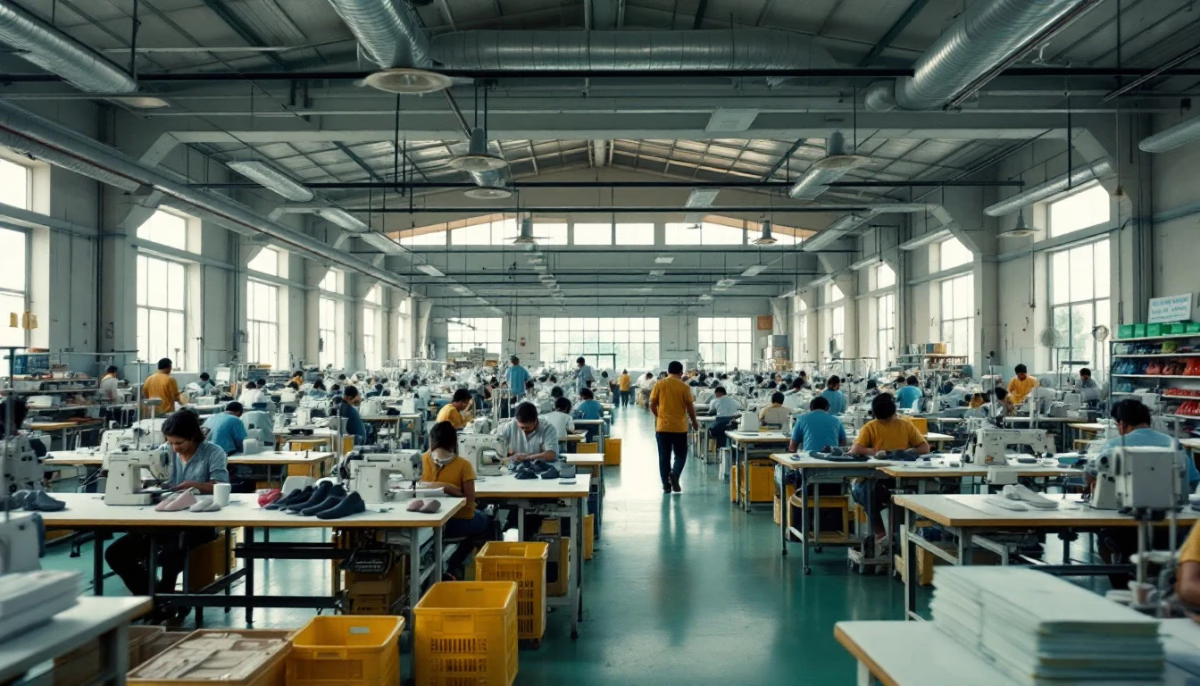
Table of contents
Cooling factories in Bangladesh: profitable within four years
The Global Labor Institute at Cornell University has published a study that puts figures to a reality that sourcing managers know all too well but rarely quantify: extreme heat in Bangladesh's garment and footwear plants not only affects the health of the workforce, it also hits productivity and, by extension, the delivery deadlines that European brands commit to. The report's conclusion is blunt: investing in cooling and ventilation systems to reduce workers' heat stress pays for itself in approximately four years.
The study analyses the impact of climate improvements in plants in the Asian country, where temperatures on the shop floor can comfortably exceed safety thresholds for much of the year. The proposal is not limited to installing air conditioning: it speaks of redesigning ventilation, rearranging workstations to avoid heat hotspots, adjusting shifts and establishing breaks. When that package is applied, productivity rises, absenteeism falls and staff turnover drops. The return comes sooner than the industry usually assumes by default.
The four-year figure matters because it breaks the classic argument that labour improvements are a cost with no return. For a manufacturer competing for European orders, the equation is simple: fewer heat-related stoppages, fewer line errors and less operator turnover mean more reliable deliveries. And in a business where the calendar rules, reliability is worth as much as price.
What it means for the wholesaler and the Spanish retailer
For a footwear shop in Spain, this news may seem distant. It is not. Heat stress at source translates, sooner or later, into production delays, batches with quality defects and cost increases that the manufacturer ends up passing on in the FOB price. A supplier that invests in cooling is buying operational stability, and that stability is what allows a wholesaler to commit to delivery dates with its retail network without gambling the season.
For the wholesaler, the report provides ammunition in negotiation and supplier selection. More and more end customers ask about the conditions in which what they buy is made, and not only for ethical reasons: traceability and labour conditions have become purchasing criteria in tenders, contracts with key accounts and distribution platforms. A supplier that documents climate and safety improvements is a supplier with less reputational risk and less logistical risk.
It is also worth reading the study through the lens of energy costs. Investment in cooling is not free and depends on the price of electricity in Bangladesh, a volatile factor. But the report maintains that even under that scenario, the return stays within a reasonable horizon. For the European buyer, the practical takeaway is that the "I can't afford it" argument loses force against the evidence that the improvement pays for itself.
The context of Spanish sourcing
Spain imports a very significant share of its low- and mid-cost footwear from Asia, and Bangladesh has gained weight as a complementary origin to China, Vietnam or India, especially in volume categories. Pressure on margins in the Spanish wholesale channel means any variable that alters deadlines or prices is felt immediately. That is why production conditions at source stop being a matter of corporate social responsibility and become a matter of purchasing management.
The Cornell study also points to a less visible effect: the reduction of absenteeism. In plants where the heat is unbearable, operators are absent or perform below their capacity, and that creates bottlenecks that pile up right before peak season. A manufacturer with a stable workforce and adequate conditions absorbs last-minute orders better, something the Spanish retailer especially values in short seasons such as spring-summer.
The conclusion for the sector is clear: climate improvements in factories are not an altruistic expense, they are an operational investment with a measurable return and a competitiveness factor for those who buy at source.
What to look at when choosing a supplier
- Real ventilation and temperature conditions on the production floors, not just certificates on paper.
- Workforce stability and turnover rates: they indicate whether conditions are sustainable.
- Capacity to absorb order peaks without delays in high season.
- Transparency of the manufacturer when sharing production data and audits.
- Impact of energy costs on the final price and how it is passed on to the buyer.
The Cornell report does not solve all the problems of Asian sourcing, but it does dismantle one of the most repeated arguments for not investing in labour conditions. For the Spanish wholesaler, the consequence is direct: the suppliers that improve now will be the ones that deliver reliably within two or three seasons, and that, in a business of tight margins, marks the difference between fulfilling orders and running out of stock.
Looking for a wholesale footwear supplier? Sign up at CalzadosJAM →
Comments
Leave a comment
Calzados JAM · Mayorista
Explora nuestro catálogo de +1000 referencias
Calzado al por mayor para mujer, hombre e infantil. Marcas nacionales e internacionales.
Newsletter
Newsletter
Get the latest news and exclusive offers in your inbox.

Be the first to comment