


Primark and Circ sign a recycled polyester agreement
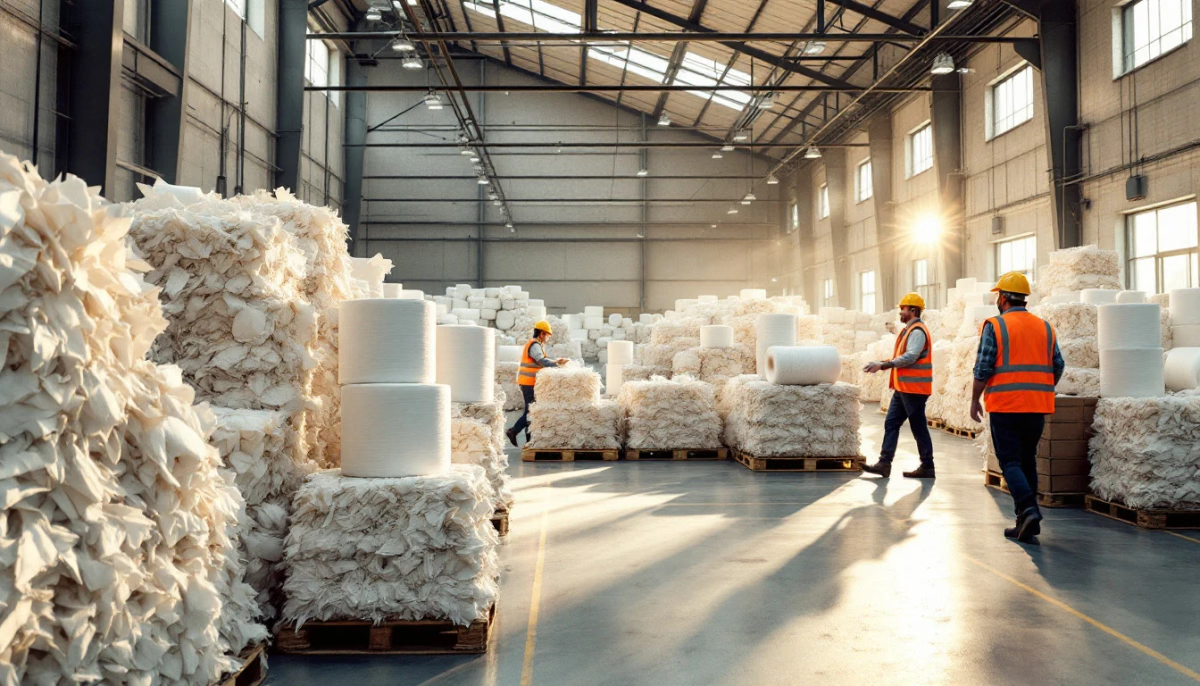
Table of contents
Primark secures Circ's recycled polyester
Primark has signed an agreement with Circ, a company specialising in textile recycling, to buy and use recycled polyester in its production. The move goes beyond a simple raw material purchase: Circ has committed to building a plant valued at 500 million dollars in France, with the capacity to process 70,000 tonnes of textile waste per year. That facility is being built, to a large extent, to meet the demand committed by Primark.
The detail is not minor. Until now, large-scale textile recycling faced a classic problem: there was technology, there was waste, but there was no buyer willing to sign long-term volumes. When a retail giant like Primark guarantees an outlet for the material, the industrial project stops being a pilot and becomes a business. Circ is building because it has someone to sell to.
Polyester is the most widely used synthetic fibre on the planet. It is in T-shirts, linings, sweatshirts and also in a significant part of footwear: inner linings, insoles, laces, technical fabrics and sneaker components. Its price moves with oil, and its availability depends on global supply chains that have given more than one scare in recent years. Any progress towards a recycled polyester with stable and traceable supply matters to anyone who manufactures or sells textile and footwear products.
What it means for a footwear store
For the retailer, the news arrives in the form of a selling point and competitive pressure. The European consumer, and the Spanish one in particular, has incorporated sustainability into their purchasing decision, even if unevenly. Large chains know this and exploit it: if Primark can say that part of its product incorporates traceable recycled polyester, the rest of the market is obliged to take a position.
- Commercial argument: stores that work with suppliers able to certify recycled materials will have a differential message in the shop window and on the product page.
- Pressure on the range: customers compare. If a large chain communicates recycled at a low price, the independent store needs to explain why its product costs more or what it offers differently.
- Greenwashing risk: consumers are better informed and detect empty labels. Better not to promise what cannot be certified.
What it implies for the wholesaler
The footwear wholesaler is the link that translates raw material decisions into the final price. If recycled polyester becomes established as the standard in mass-market textiles, the pressure will reach footwear components. And there are two readings here.
The first is about cost. Mechanical and chemical recycling still carries cost premiums over virgin material. Until Circ's French plant is at full capacity, recycled material will remain more expensive and with limited availability. The wholesaler who wants to offer it will have to negotiate volumes and accept longer lead times.
The second is about opportunity. Brands and manufacturers that move first will be able to place product with a recycled component with customers who are asking for it today and cannot find it. In a Spanish market where footwear competes on tight pricing and narrow margins, differentiating by material and not only by design is a real path to value.
The agreement between Primark and Circ will not change Spanish footwear overnight, but it does set the direction: whoever controls the supply of recycled material will have an advantage in cost and in narrative.
Context of the Spanish market
Spain is a footwear-producing country with an industrial base concentrated in Alicante, Murcia and La Rioja, heavily export-oriented. That industry already works with European material suppliers and closely follows EU regulations on textile waste and extended producer responsibility. The construction of a textile recycling plant in France is, for the Spanish manufacturer, a potential supplier at a reasonable distance, not a distant experiment.
At the same time, the Spanish wholesale channel remains highly exposed to Asian imports, where virgin polyester dominates. The coexistence of low-cost imported product and European product with certified recycled material will define the next decade. It is not about one displacing the other, but about the end customer starting to distinguish and pay the difference when they understand it.
For a store or a distributor, the practical takeaway is simple: ask suppliers what the real composition of linings and fabrics is, request certificates when communicating sustainability and do not wait for regulation to force you before starting to move. Whoever arrives with the message prepared and the product documented will sell better.
Looking for a wholesale footwear supplier? Sign up at CalzadosJAM →
Comments
Leave a comment
Calzados JAM · Mayorista
Explora nuestro catálogo de +1000 referencias
Calzado al por mayor para mujer, hombre e infantil. Marcas nacionales e internacionales.
Newsletter
Newsletter
Get the latest news and exclusive offers in your inbox.

Be the first to comment