


Adidas and a New York boutique launch a Samba inspired by the cannoli
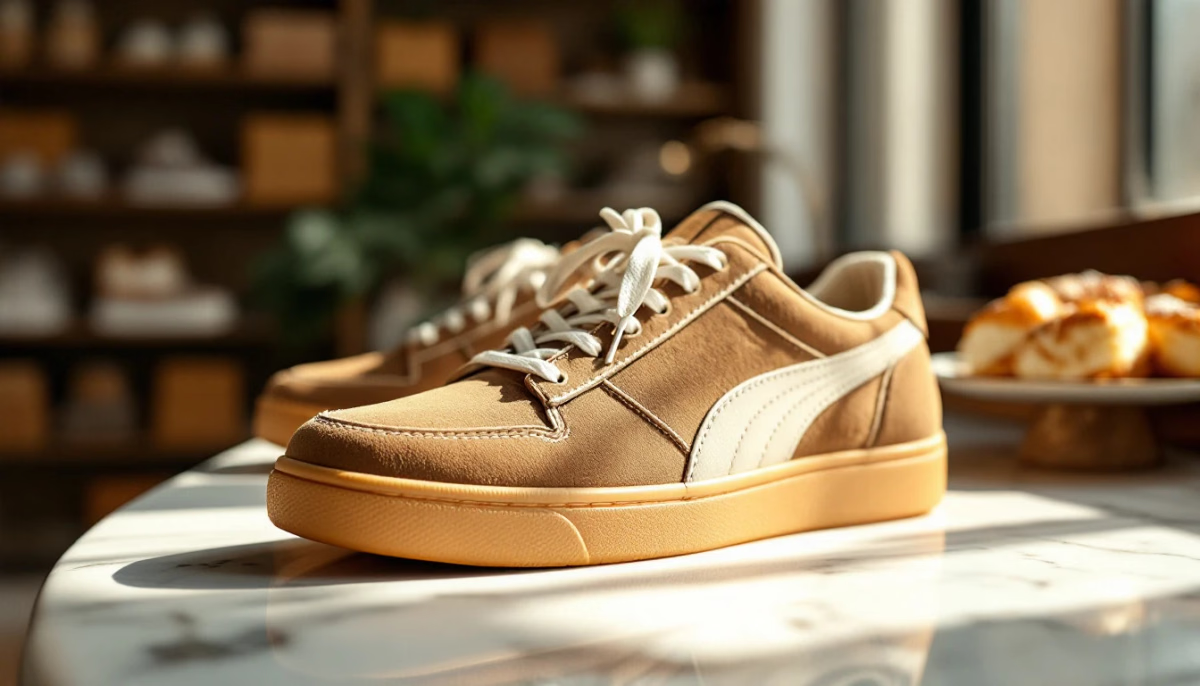
Table of contents
A collaboration that blends sneaker culture and Italian pastry
Adidas has once again shown that limited editions remain its main marketing tool. This time, the German brand has teamed up with a New York sneaker boutique to launch a special version of its Samba model inspired by the cannoli, the most iconic Sicilian sweet. The release coincides with the feast of San Gennaro, the Italian celebration that every September fills the streets of Little Italy in Manhattan with music, food and tradition.
The news isn't just the design, which plays with cream and brown tones and details that evoke the filling and texture of the cannoli. What matters for the industry is the strategy: only 600 pairs available worldwide. A figure that turns the product into an instant object of desire and that, as is usual with this kind of drop, will fuel resale on secondary platforms at prices far above the retail price.
What it means for a footwear store
For the independent retailer, this kind of launch is a reminder that the footwear business is no longer governed solely by season and price. Exclusivity, narrative and cultural timing now move more units than a 20% discount. A neighborhood store can't compete to get those 600 units, but it can learn from the model: build anticipation, tell a story and limit the production of its own selections.
What's more, the phenomenon of hyper-local collaborations — a global brand teaming up with a store in a specific neighborhood — opens an interesting path for small retailers. It's no longer just about selling brands, but about becoming a tastemaker and, why not, a content partner for brands seeking authenticity.
The wholesaler facing the rise of the drop
For the wholesaler, the reading is different but equally useful. Limited releases put pressure on the supply chain: they demand tight deadlines, flexible production and logistics capable of handling small volumes with high perceived value. The traditional model of buying by the container and storing for months now coexists with short, almost artisanal orders that seek to replicate the drop effect.
In Spain, where wholesale footwear carries enormous weight in clusters such as Elche, Alicante or La Rioja, this trend pushes suppliers to offer short runs, personalization and rapid response capability. The end customer no longer just wants a good price: they want to feel they're buying something not everyone has.
Context of the Spanish market
The Spanish footwear market is experiencing an uneven recovery. While large chains and global sports brands grow, small retailers struggle to differentiate themselves. Collaborations and limited editions are one of the few weapons that allow them to compete without entering a suicidal price war. The cannoli Samba is an extreme example, but the lesson applies at any scale: if your product tells no story, it competes on price alone.
The footwear consumer no longer buys shoes: they buy belonging, story and moment. Whoever doesn't understand that will end up selling clearance stock.
For the wholesaler, the opportunity lies in facilitating that personalization: short runs, careful packaging, the possibility of co-branding with the store. For the retailer, in ceasing to be a mere channel and becoming a voice with judgment. In both cases, the Adidas-New York boutique model points the way: less volume, more narrative.
Looking for a wholesale footwear supplier? Sign up at CalzadosJAM →
Comments
Leave a comment
Calzados JAM · Mayorista
Explora nuestro catálogo de +1000 referencias
Calzado al por mayor para mujer, hombre e infantil. Marcas nacionales e internacionales.
Newsletter
Newsletter
Get the latest news and exclusive offers in your inbox.

Be the first to comment