


Gerescal launches second phase of used footwear collection in stores
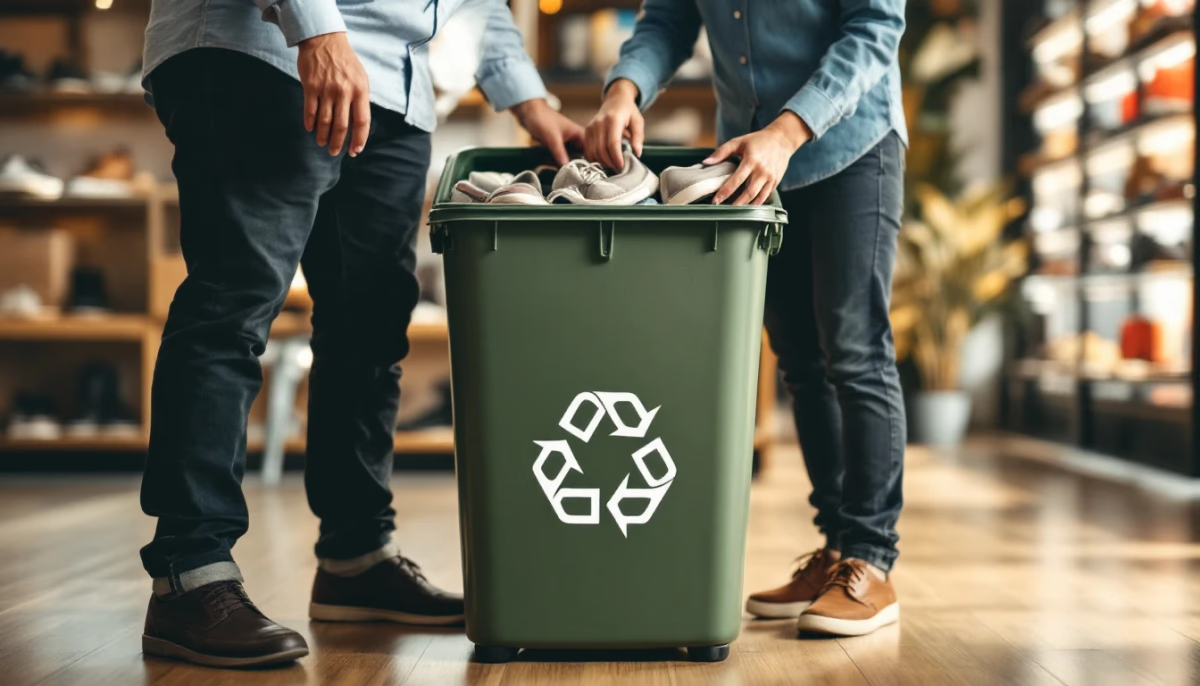
Table of contents
- From urban containers to store counters: the evolution of Gerescal
- What does this advance mean for the footwear wholesaler?
- The impact on the footwear store: more than a container
- Context of the Spanish market: circularity as a regulatory trend
- Keys to adapting to the new reality
- The future: from waste to resource
From urban containers to store counters: the evolution of Gerescal
Gerescal, the collective system of extended producer responsibility (SCRAP) for textile and footwear waste, has launched the second phase of its 2026 pilot test. After a first stage focused on collection through urban containers managed by collaborating entities, the project takes a qualitative leap by directly integrating points of sale as selective collection nodes for used shoes. Under the motto "From waste to resource", the initiative turns footwear stores into active spaces of environmental co-responsibility.
This second phase evaluates the feasibility, traceability and recovery potential of post-consumer footwear collected directly in the establishments of participating brands. The pilot test aims to demonstrate that the retail channel can be an efficient link to close the product life cycle, reducing the rate of waste sent to landfill and increasing the proportion of materials recovered for new production processes.
What does this advance mean for the footwear wholesaler?
For a wholesaler that supplies multi-brand stores, the news has several layers of impact. First, integrating in-store collection implies an operational change: points of sale must set up spaces for receiving and temporarily storing used footwear, as well as establish reverse logistics procedures. This can translate into new demands from manufacturing brands, which will ask their distributors and retail clients to actively participate in the program.
Furthermore, the traceability required by Gerescal will mean that collected footwear must be identified, classified and registered correctly. Stores will need training and digital tools to manage this flow. For the wholesaler, this opens a differentiation opportunity: offering its retailer clients advisory and implementation services for collection systems, or even acting as a logistics intermediary for reverse collection, consolidating used footwear from several stores before sending it to treatment plants.
On the other hand, the wholesaler must anticipate regulatory changes in the medium term. The footwear SCRAP has been mandatory since 2025 in Spain, and if this test proves efficient, it is likely that in-store collection will become a legal requirement. Those who already have the process internalized and optimized will have a competitive advantage over those who react late.
The impact on the footwear store: more than a container
For the retailer, the immediate implication is operational: receiving, storing and managing the return of used footwear from customers. But it is also a loyalty opportunity. Consumers increasingly value brands and businesses that demonstrate environmental commitment. A store that offers a clean point for shoe recycling strengthens its image of responsibility and can attract a more conscious customer profile.
The challenge lies in correct communication: the customer must understand that not all used shoes are recyclable (depending on material and condition), and that depositing them in the store is not a charitable gesture but a circular economy one. Furthermore, store staff must be trained to inform and manage the process without increasing the workload excessively. Brands and wholesalers that provide simple tools (labels, bags, QR codes) will facilitate adoption.
Context of the Spanish market: circularity as a regulatory trend
The Gerescal initiative is part of the transposition of the European Waste Directive (2018/851) and the entry into force of mandatory SCRAPs for textile and footwear in Spain since January 1, 2025. The Spanish footwear sector, with a strong tradition in the Vinalopó Valley (Alicante) and other producing areas, faces the challenge of adapting its linear make-use-dispose model to a circular one.
In-store collection is not new in other sectors (such as textiles with collection programs in large stores), but in footwear it is pioneering. If the pilot is successful, it could be scaled nationally, forcing all agents (manufacturers, importers, wholesalers and retailers) to integrate reverse logistics into their daily operations. For the wholesaler, this means rethinking its supply chain: not only distributing new product, but also facilitating the return of used ones.
Furthermore, the recovery of collected footwear opens new business opportunities. Recovered materials (rubber soles, leather uppers, synthetic textiles) can be reintroduced into the manufacture of new shoes or into other sectors (automotive, construction). Wholesalers with strategic vision could collaborate with waste managers or even create their own recycled product lines, positioning themselves as leaders in sustainability.
Keys to adapting to the new reality
Circularity is not a fad, but a requirement that is here to stay. Both wholesalers and retailers must start preparing now. Some concrete actions:
- Team training: Train store staff on the collection process, basic classification and communication with the customer.
- Physical infrastructure: Enable a visible and accessible space for collection (container, marked shelf).
- Agreements with authorized managers: Establish contracts with waste collection and treatment companies that ensure traceability.
- Digitalization: Use software to record collections, generate reports and comply with SCRAP obligations.
- Customer communication: Explain the environmental benefits and the material cycle through signage or social media.
The wholesaler, for its part, can offer these services as added value to its retailer clients, turning a regulatory requirement into a competitive advantage.
The future: from waste to resource
The Gerescal pilot test is a concrete step towards the circular economy in footwear. If it manages to demonstrate that in-store collection is viable, traceable and profitable, it will lay the foundations for a new business model where waste stops being a problem and becomes a resource for the industry. For the wholesaler and retailer, adapting in time will not only avoid penalties, but will open new avenues for differentiation and loyalty in a market increasingly demanding sustainability.
Looking for a wholesale footwear supplier? Register at CalzadosJAM →
Comments
Leave a comment
Calzados JAM · Mayorista
Explora nuestro catálogo de +1000 referencias
Calzado al por mayor para mujer, hombre e infantil. Marcas nacionales e internacionales.
Newsletter
Newsletter
Get the latest news and exclusive offers in your inbox.

Be the first to comment