


Kiabi strengthens its network in Madrid with its second compact format
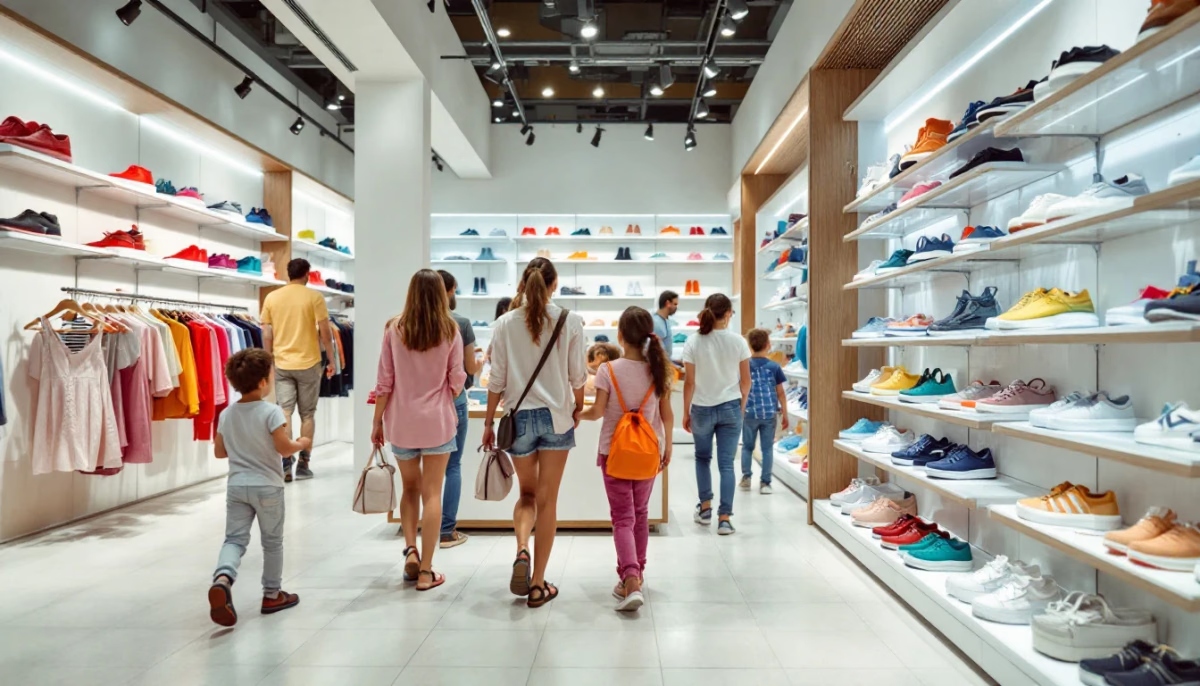
Table of contents
Kiabi accelerates its urban expansion with more flexible stores
The French family fashion chain Kiabi has inaugurated a new establishment in the Madrid Sur shopping center, in the Madrid district of Puente de Vallecas. With 670 square meters, this opening represents the arrival in the capital of the compact format that the company already tested in Illescas (Toledo) last February. With this move, Kiabi now has 90 stores between Spain and Portugal and consolidates its presence in Madrid, where it now has seven points of sale.
The new space not only brings fashion offers for women, men, babies, and children closer to local families, but also incorporates KiTChoUN, Kiabi's own children's footwear brand. The store has been designed under the Kolors concept, a commercial organization model that the firm is progressively implementing to improve the shopping journey and group collections and services more intuitively.
The opening has generated ten direct jobs and comes with promotions and family activities during the first weekend of September, just before the start of the school year. A clear strategy to capture the demand for replenishing children's footwear and clothing for back-to-school.
What does this move mean for the footwear wholesale channel?
For an independent footwear store, the expansion of chains like Kiabi with compact formats in neighborhood shopping centers poses a direct challenge in segments such as children's and family footwear. Proximity to the consumer, combined with aggressive prices and seasonal assortment, pressures the traffic of traditional shoe stores, especially in urban areas with middle purchasing power.
For the wholesaler, the news confirms a key trend: large fashion retailers are integrating footwear as a strategic category within their offering, with own brands like KiTChoUN. This reduces market space for independent brands in the retail channel, but also opens B2B collaboration opportunities if the wholesaler can position itself as a value-added supplier: more service, more turnover, more product differentiation compared to the generic offering of chains.
Kiabi's compact format is a sign that textile retail seeks to optimize square meters without losing capillarity. For footwear, this implies that brands must work with shorter collections, with fast replenishment and agile logistics, something that a good wholesaler can offer better than a distant factory.
The Spanish context: children's footwear and the battle for back-to-school
Spain is a market where footwear distribution remains highly fragmented, with a significant weight of the specialized store. However, the entry of fashion chains with compact urban formats is eroding that fabric, especially in low and medium-low price segments. Kiabi's opening in Puente de Vallecas is not an isolated event: it responds to a strategy of conquering densely populated neighborhoods where average income limits spending on premium brands.
Back-to-school is the second most important campaign for children's footwear after the summer season. Openings scheduled in September seek to capture that demand peak.
For the Spanish wholesaler, the challenge is twofold: on one hand, competing against the price and convenience of these chains; on the other, leveraging their own agility to supply small businesses that want to differentiate themselves through service, advice, and quality product. The key is not to imitate Kiabi's model, but to offer what they cannot: brands with identity, wide size ranges, personalized attention, and knowledge of the local customer.
Furthermore, Kiabi's expansion in Madrid and Toledo confirms that physical retail is still alive, but requires more flexible and profitable formats. Wholesalers who understand this logic and adapt their offering to smaller stores, with more frequent orders and less volume, will have a competitive advantage in the coming years.
Conclusion: the compact format redefines the commercial map
Kiabi's opening in Madrid Sur is another example of how fashion chains are redefining proximity commerce. For the footwear sector, it implies closely monitoring the movements of these giants, but also reinterpreting one's own business model. Specialization, speed of replenishment, and closeness to the end customer are weapons that the wholesale channel can strengthen.
In this scenario, having a supplier that offers updated catalogs, agile deliveries, and flexible conditions becomes a decisive competitive advantage. The question is not whether large chains will continue to grow, but how independent shoe stores can coexist and differentiate themselves.
Looking for a wholesale footwear supplier? Register at CalzadosJAM →
Comments
Leave a comment
Calzados JAM · Mayorista
Explora nuestro catálogo de +1000 referencias
Calzado al por mayor para mujer, hombre e infantil. Marcas nacionales e internacionales.
Newsletter
Newsletter
Get the latest news and exclusive offers in your inbox.

Be the first to comment